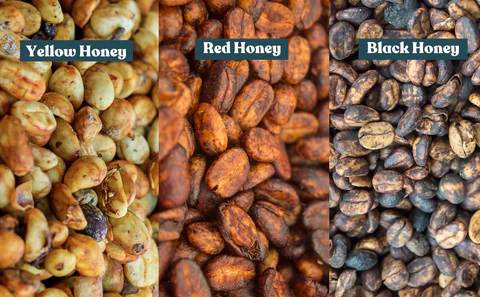
After a rest, that freshly dried parchment coffee is ready for the next step.
In the last post, we took freshly pulped beans and processed it into parchment coffee—some using the wet method and some dried as honeys. Once dried, those beans were stored away to rest.
Why Rest Parchment Coffee?
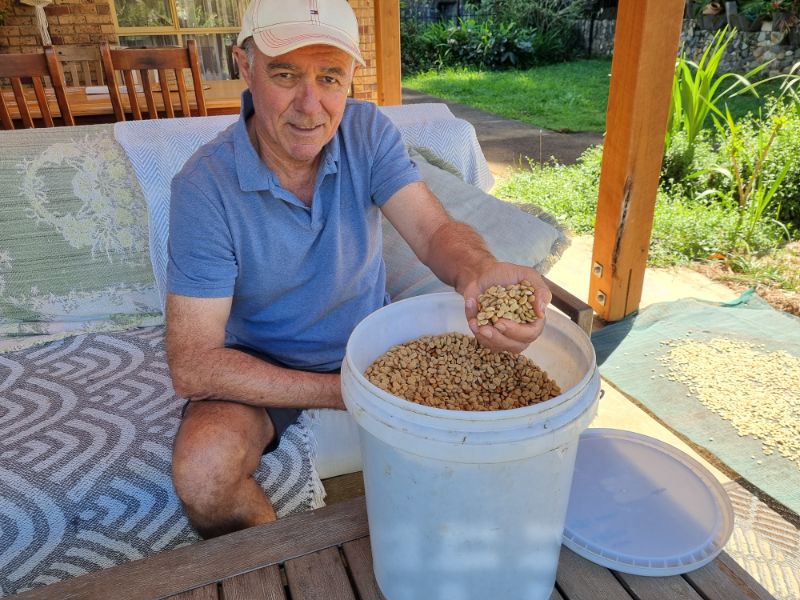
Before hulling, it’s best to let your parchment coffee sit for a month or three or longer. This resting period allows the remaining moisture within the beans to evenly spread out, essential for them to roast evenly later on. You can rest before or after hulling, but don’t skip this, roasting unevenly dried beans will spoil them – some bits burnt and some un-cooked. Yuk!
Stored in parchment, the beans are well protected. This thin, crispy layer acts as a natural barrier, keeping the beans stable and fresh for several years.
What Is Hulling?
At this stage, all that remains around the bean is the brittle parchment layer.
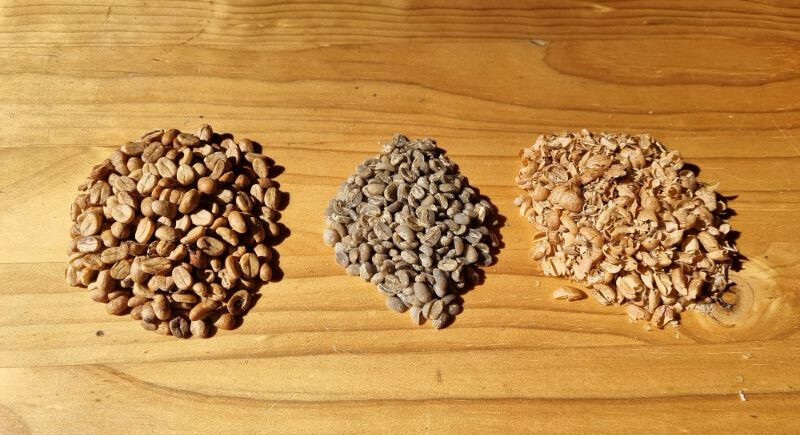
Hulling is simply the process of removing the brittle parchment shell to reveal the green coffee bean inside. It’s the last step before roasting.
Hulling Coffee at Home
There are plenty of ways to hull coffee, but at home the simplest method is surprisingly effective; a blender or smoothie maker does the job perfectly.

Add a small batch of parchment coffee at a time to break the brittle parchment without damaging the beans.
A few things to keep in mind:
- The beans should be properly dried (around 10-12% moisture) so they’re hard and more resistant to damage.
- Avoid sharp, aggressive blades if possible. Blunter blades—or modified ones—are gentler on the beans. I’ve found ice-crusher blades to be well suited.
It may take a bit of trial and error, but once dialled in, it works extremely well.
Three Pass Winnowing
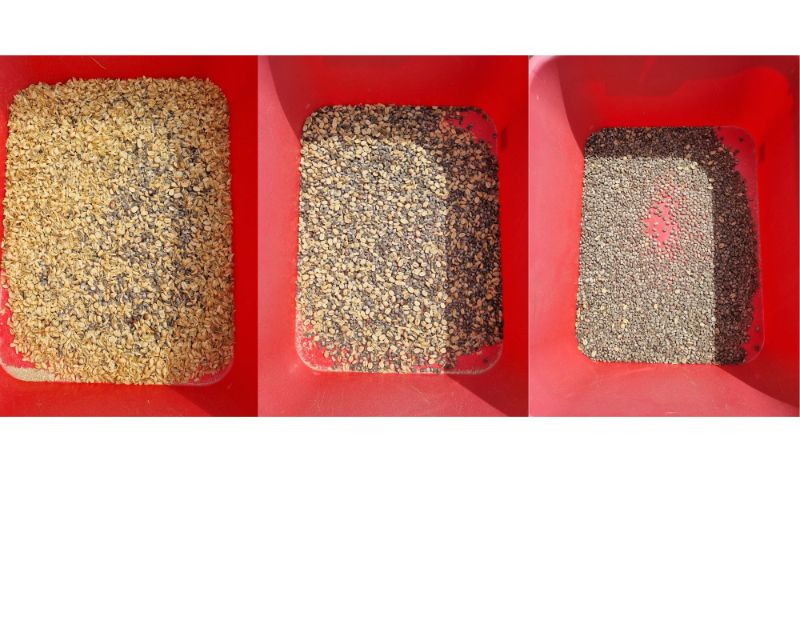
After hulling, you’ll have a mix of beans, loose parchment and un-hulled beans.
To separate them, use a simple winnowing method. Pour the mixture in front of a fan:
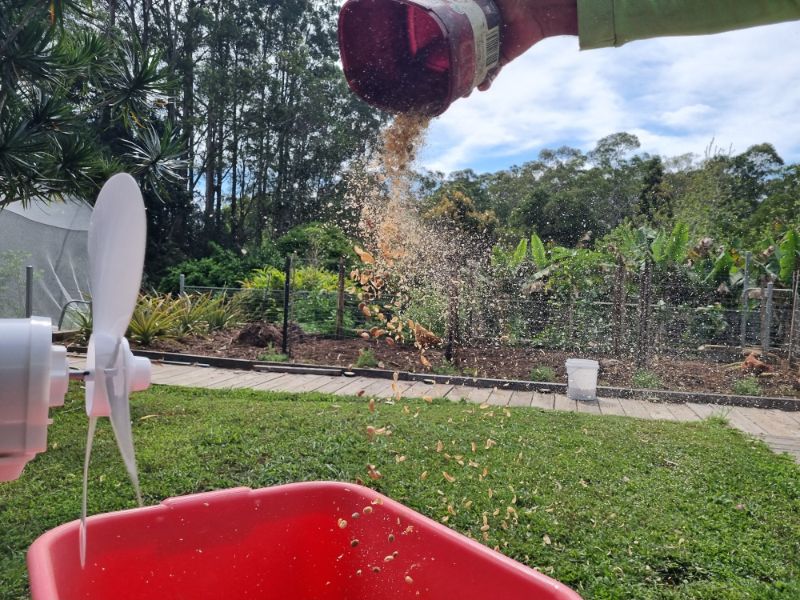
- The heavy beans fall straight down.
- The light parchment blows away.
It’s quick, clean, and very effective.
A Better Way: Three Passes
For best results, hull/winnow in three passes.
The first pass removes most of the parchment – but it wont remove it all. Winnow all that loose parchment off otherwise it tends to just get in the way, gumming up the batch and all you are doing is grinding the loose parchment pieces finer and finer without removing any more parchment.
It’s more efficient to then run the beans through a second time to clean up what remains and winnow again. This reduces the total time in the blender and helps avoid damaging the beans.
The last few stubborn pieces of parchment can be rubbed off by hand before a final winnow.
Ready for Roasting
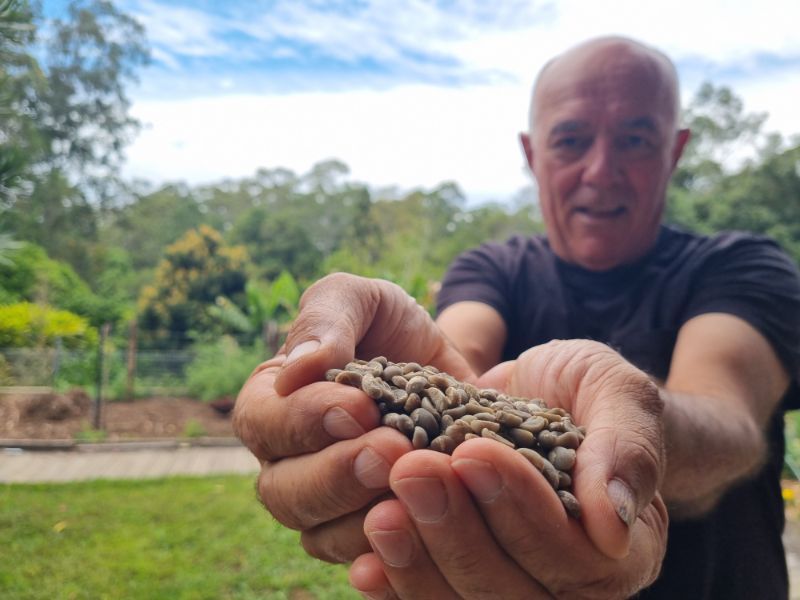
What you’re left with might not look like much—but it’s absolutely 5 star coffee: home-grown, hand-picked, single origin green coffee beans. Unlike roasted coffee, green beans can be stored for months in an airtight container. However, good luck keeping them for months…
From here, it’s all about roasting—and that’s exactly what we’ll get into in the next post.